You Say You Want a Revolution!?!?
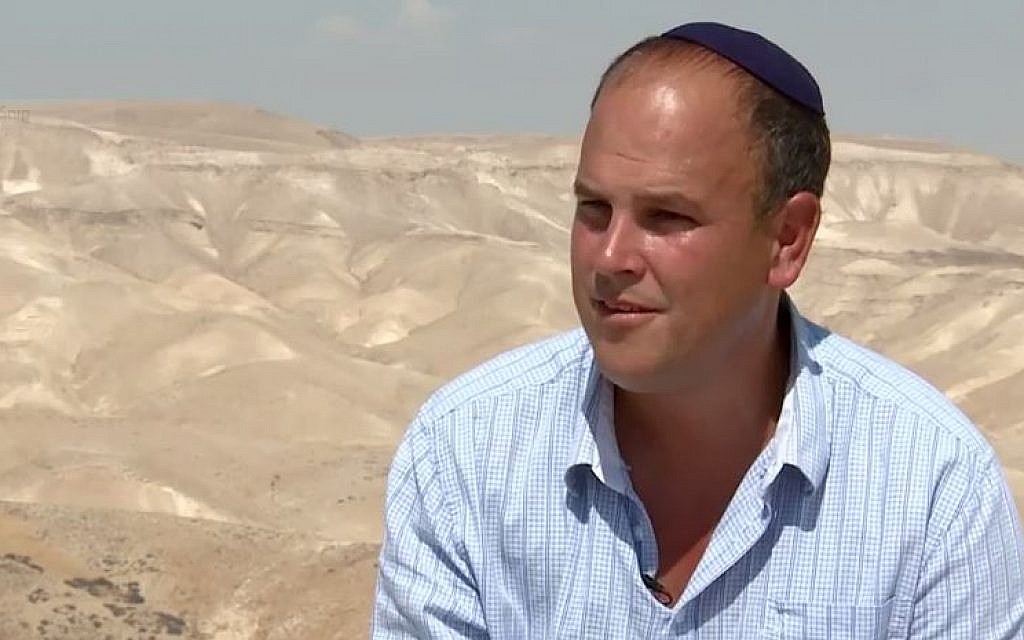
One of my challenges and treats this summer is reading a new
book by my teacher, Dr. Micah Goodman, with whom I had the privilege of
studying over the years at the Hartman Institute in Jerusalem. The treat is
that I always find Micah’s teachings deeply inspiring. The challenge is that
his new book, Chazarah B’li Teshuvah was published in these past few
months in Hebrew. Yet, day-by-day, I read a bit – drinking deeply from the
ideas contained in this new work, even as I polish my Hebrew skills. The Hebrew
title is a play on words, Chazarah referring to “one who returns” and teshuvah
also meaning “returning” or in the parlance of our upcoming High Holy Days, “repentance.”
One website titles the book, The Philosophic Roots of The Secular Religious
Divide. That is a good descriptor for the content of Micah's intriguing
book. However, it totally loses the clever play on words contained in the
Hebrew title.

Though I’m only partway through the book, I am already captivated
by its message. It’s a line of thinking I have been privileged to witness Micah
develop over the course of the years I have known and learned with him. One
central premise of Micah’s new book is that we are witnessing a revolution
within Israeli society in which both the “religious” and “secular” communities
are undergoing deep and widespread transformations. Micah places this in the
context of the ideologies of many of the early Zionist thinkers, most
especially Ahad Ha-Am (Asher Ginsburg), who is sometimes referred to as the
Father of Cultural Zionism. In the words of Micah Goodman, “The time for Ahad
Ha-Am’s message has finally arrived!” You can read more about Ahad Ha-Am’s ideology
here. Part of what grabbed me as I read Micah’s argument is his elevation of a
truth which has been known for some time, but which is often overlooked: “There
is more than one way to be ‘secular’ in modern-day Israel.” Conversely, he also
notes that “There is more than one way to be ‘religious’ in modern-day Israel.”
Indeed, this is a message which the progressive movements have been speaking
for a long time in Israel.
Micah knows of what he speaks when he writes about the revolution
taking place within both of these “worlds” within Israel. This is especially
true when he discusses the growing number of “secular” Israelis who are turning
(and returning!) to traditional Jewish texts for spiritual and intellectual
nourishment. Micah has been at the forefront of this revolution – in his
development of the Ein Prat Leadership Academy – a gap-year program for
Israelis who want to deepen their learning and sense of Jewish identity. I’ve had
the privilege to visit Ein Prat on at least three occasions – to meet and learn
with the students, who give up a year of their lives to study classic Jewish
texts and explore Jewish identity. I have also had the privilege of worshiping
on Shabbat in the community Ein Prat alumni have created in Jerusalem.

Micah has also been the author of now five books, each a
bestseller – two on the Medieval Jewish philosophers Maimonides and Yehudah HaLevi;
one on Moses and the book of Deuteronomy; one on what Micah calls Israel’s “Catch-67”(which is available in English) and this new book. As he notes in his new book,
it’s simply not possible that the first three all hit the best-seller lists
solely on the strength of sales within the “religious” community. Israelis are
deeply thirsty, hungry for spiritual identity and nourishment, even if its not
along the same paths of earlier generations. Turning to classic Jewish texts
does not mean turning to a “religious” lifestyle as it is traditionally understood.
This is a significant development. Micah also notes this phenomenon’s evolution
within modern Israeli music, as top artist have turned to “religious” themes,
texts and even practices in their own lives. This is a development I have been
following for a number of years under the guidance of another friend and teacher, Yossi Klein Halevi. Indeed, a few years back we were able to bring a
piece of this to

Part of the reason that Micah’s message grabs me is because
I see parallels in my own experiences as a rabbi and teacher in our American
Jewish community. The growing interest in, and popularity of the study and
practice of Mussar in our broader Jewish community is, I believe a parallel
development for American Jews. We, too, live in a complicated time. We, too,
want spiritual grounding and nourishment as well as a deeper connection to our
Jewish tradition. This was reinforced for me only yesterday as I sat with the
Mussar group I am leading this summer in Great Barrington, MA. We were reading
a text from Rav Shlomo Wolbe, a 20th-century ultra-Orthodox rabbi
and Mussar master (whose works I cannot get enough of!) As we read a passage from his masterpiece on Savlanut/Patience,
the examples Rav Wolbe was using were from a cultural (and gender) context
distinctly different from that of the group members (all women). I urged the
group to read his words as he wrote them in his context, and then translate his
core principle to our own. I watched the lightbulbs go on as a connection was
made. A text from a more traditional religious context can speak to our own
existential reality if we are prepared to read beyond the literal words and
hear the meta-message the text or teacher is offering. It is surely not an easy
task, especially in our time. Indeed, every day we have too many examples
where we cannot read past the words – because they and the ideas they convey are
offensive.
But I believe that there is something else going on – both in
Israel and in the American Jewish community that can ground us, nourish us, and
give us the tools we need to withstand the cacophony of our times without
losing our values and our way.
Micah’s new book may or may see its way into English
translation. But its message – along with what is going on in our own community
– especially as I see it in the interest and growing practice of Mussar (what I
like to call “The Jewish Road to Character”) is inspiring. And it is, I
believe, an antidote to the craziness that can leave us breathless and,
sometimes, hopeless.
Want to join the revolution? Here’s one path!


Comments
Post a Comment